
Curious Incident of the Dog in the Nighttime
Farmers' Alley Theatre, Kalamzoo, MI.
Scenic and Projection Designer
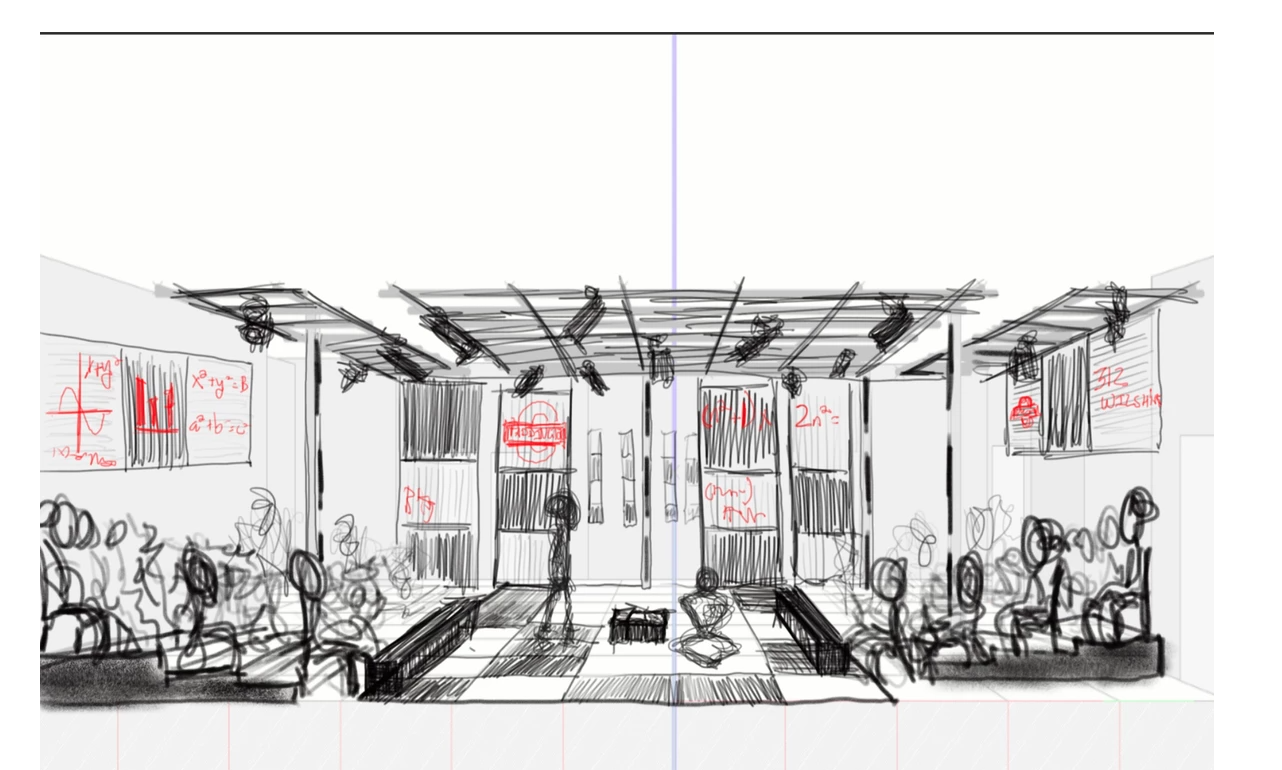
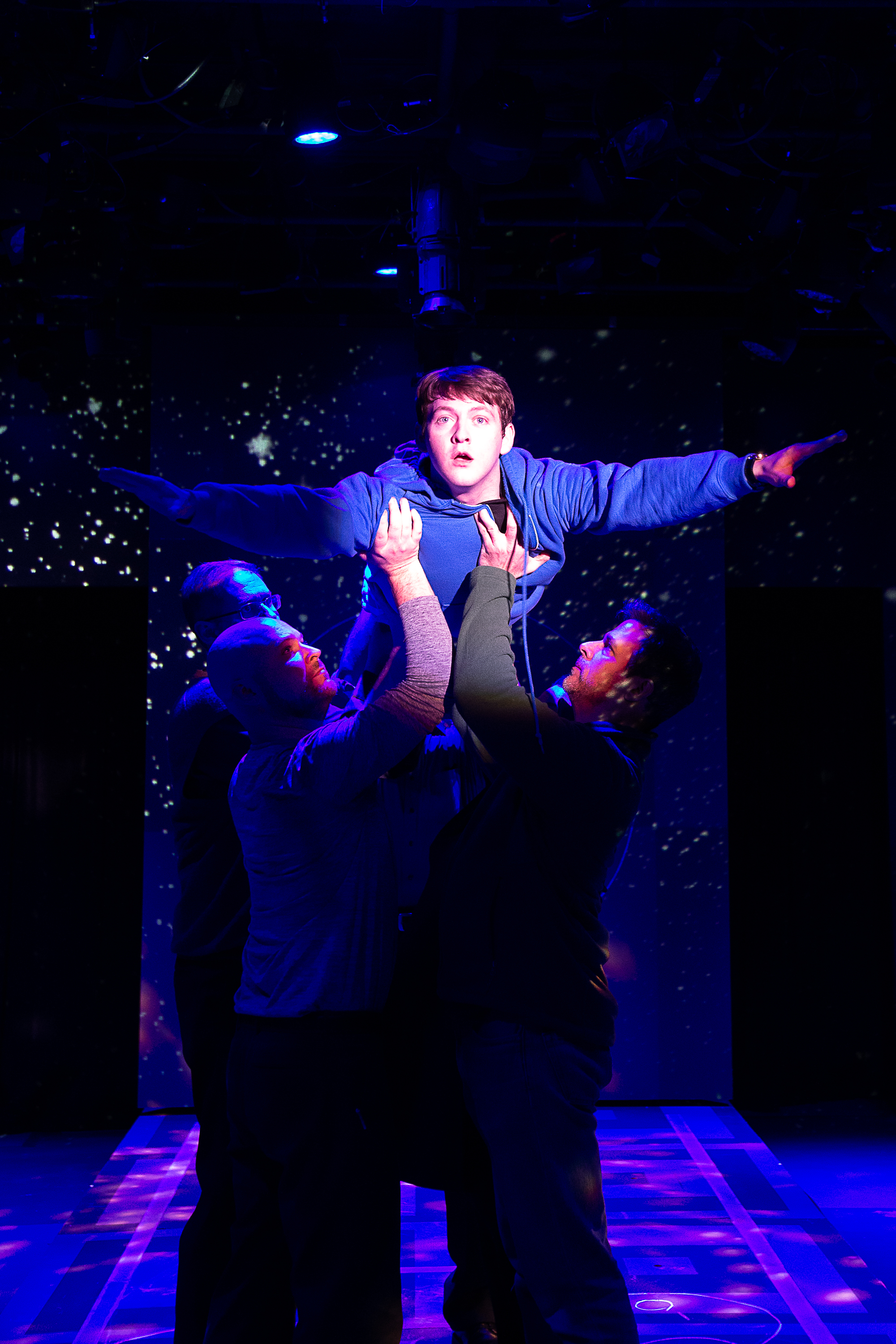
CONTEXT: Curious Incident is a technical and design challenge largely because the script is written to utilize the most advanced performance technology available to create the reality of the world as seen through the eyes of the main character, Christopher. Christopher is an autistically-coded, British youth whose brilliance with math and numbers is ever present in his preference for structure, routine, and proofs. However, Christopher struggles to understand the nuances of social interaction and the ways other characters allow their emotions, desires, and wants to influence their actions and tactics. It is simply impossible for Christopher to comprehend how people might interpret what he recognizes as 'fact' in different ways and for their own purposes. As a creative team, we knew we would need the visual world to provide support for the rigidity and structure within which Christopher is most comfortable. We also knew, that while Christopher struggles with solcial interaction, as a child, he is inherently curious and playful. Thirdly, our creative team recognized that the play's structure provides the audience with three different perspectives on place and time throughout Christopher's story: 1) the audience sees the world through Christopher's eyes, 2) the audience witnesses Christopher's actions first hand (or as my student assistants would call a third-person point of view), and 3) the audience (and Christopher) fully acknowledge the character/audience relationship inside the theatre when the character directly addresses the audience.
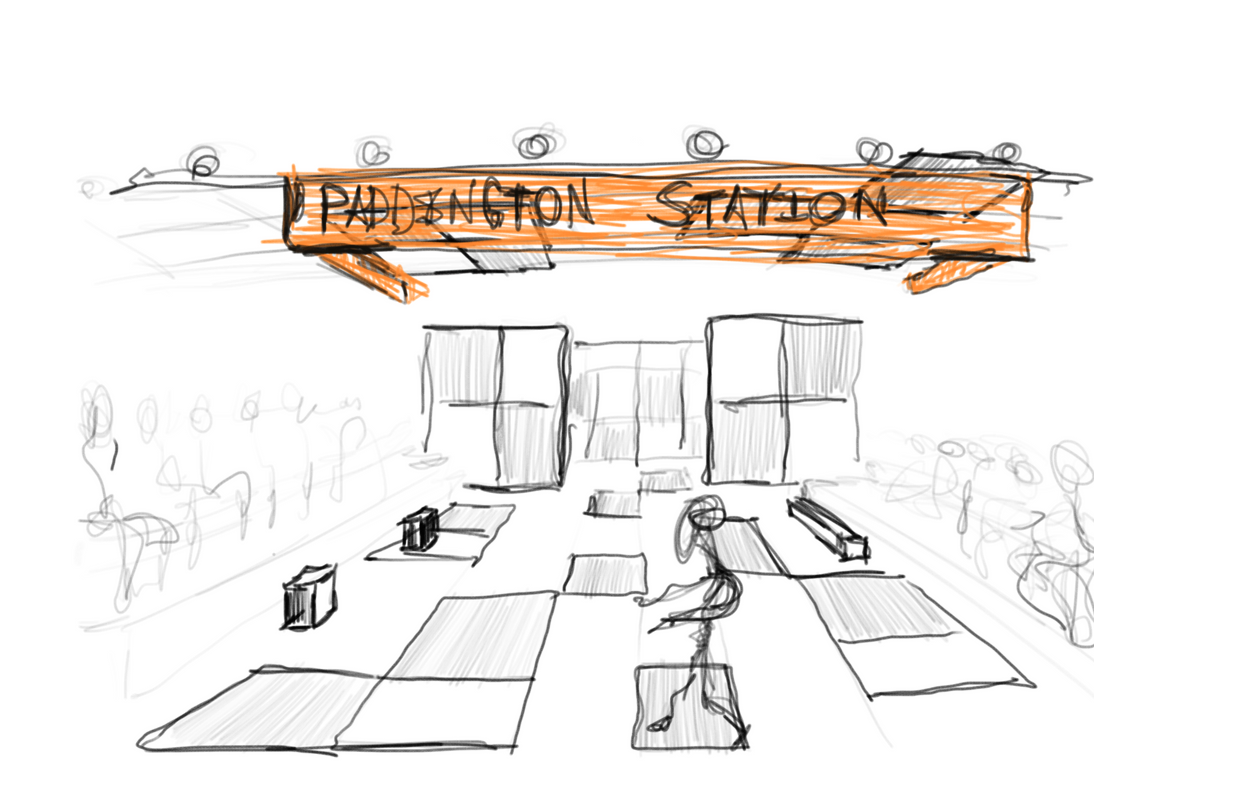
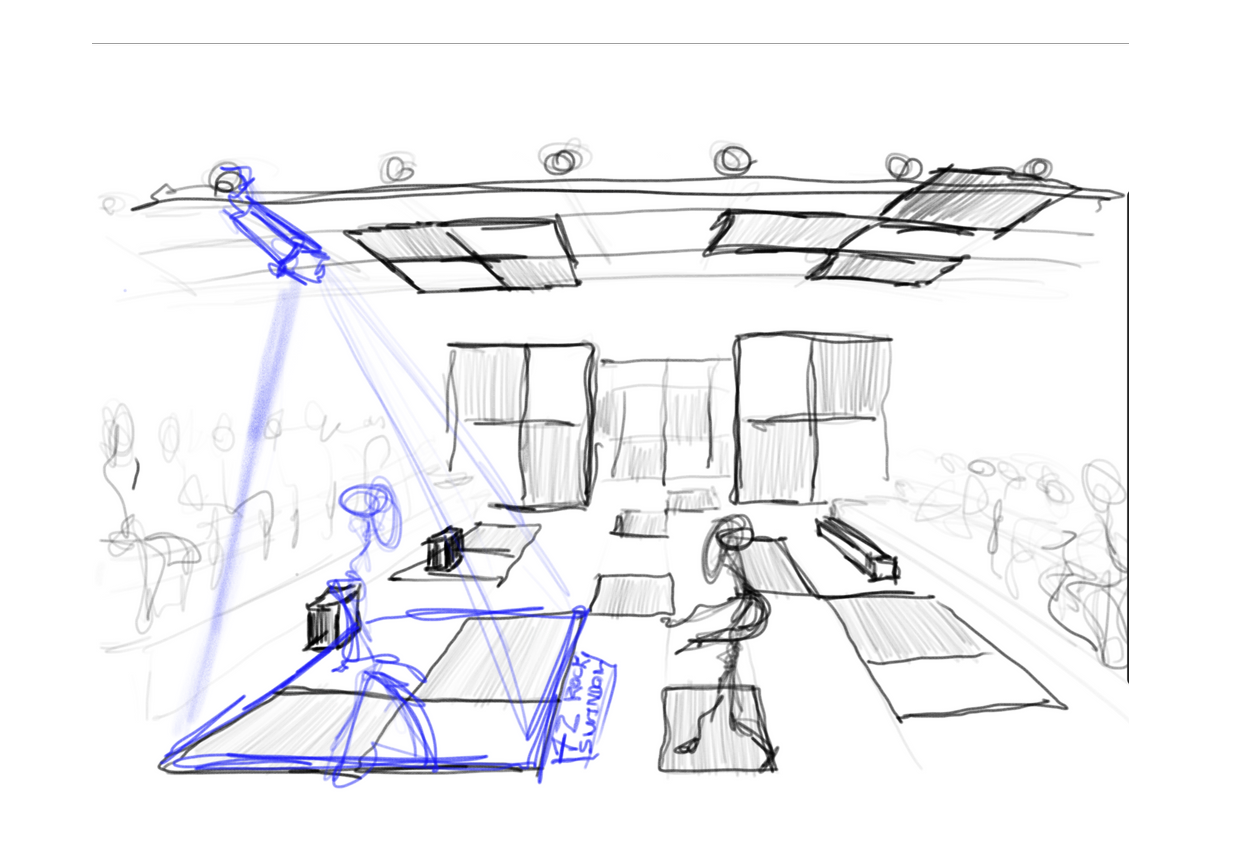
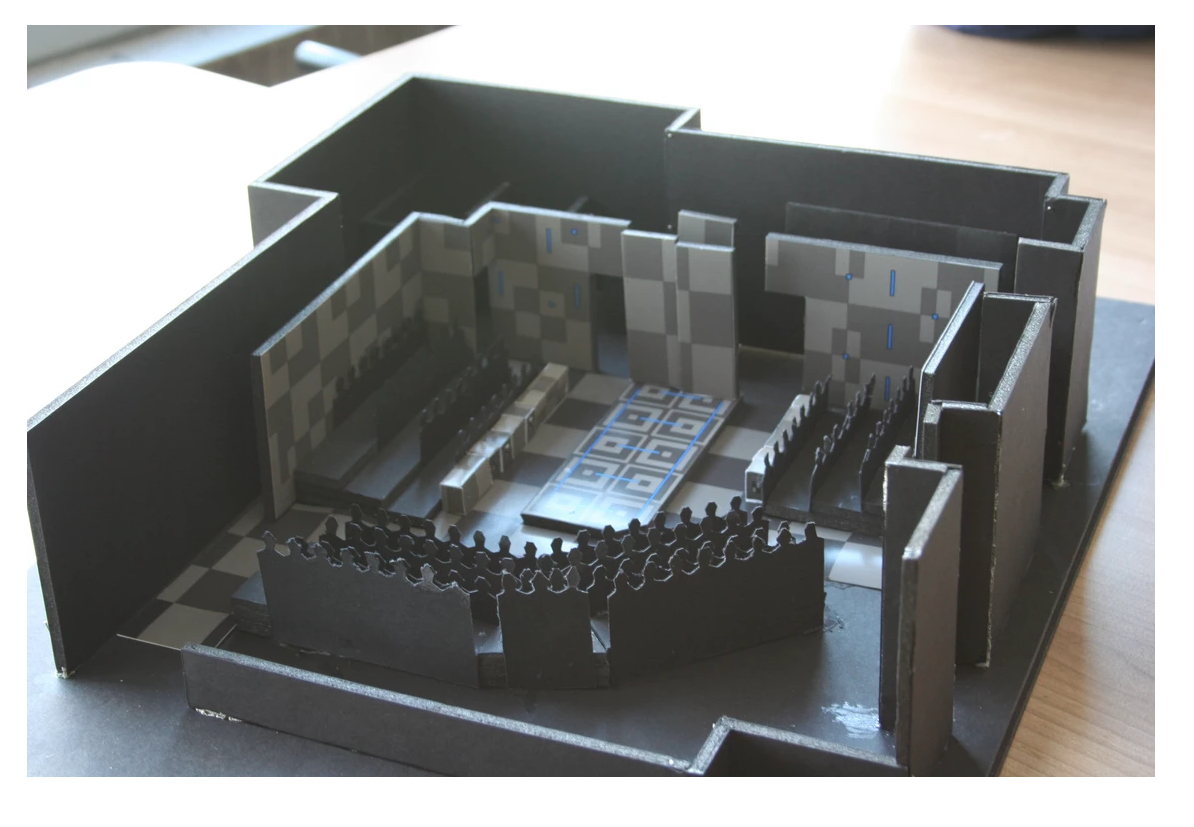
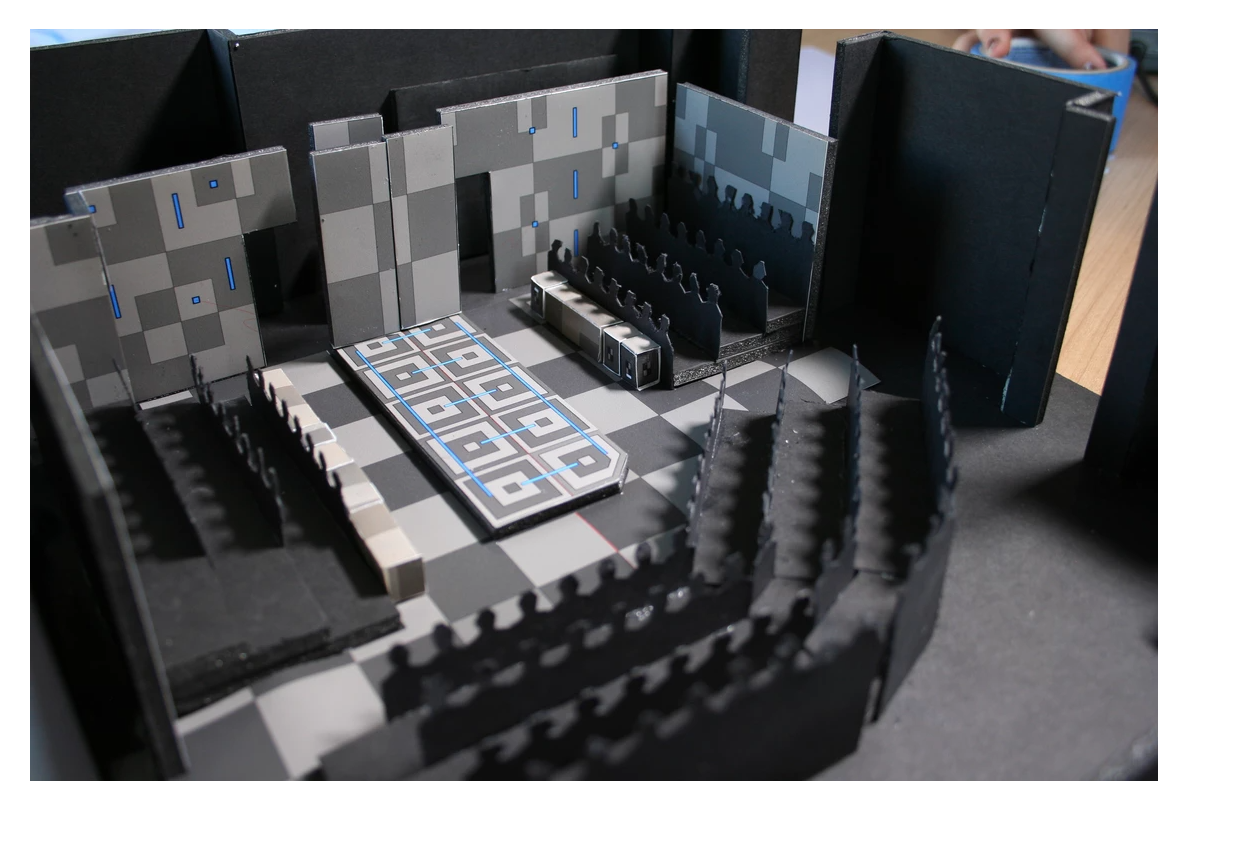
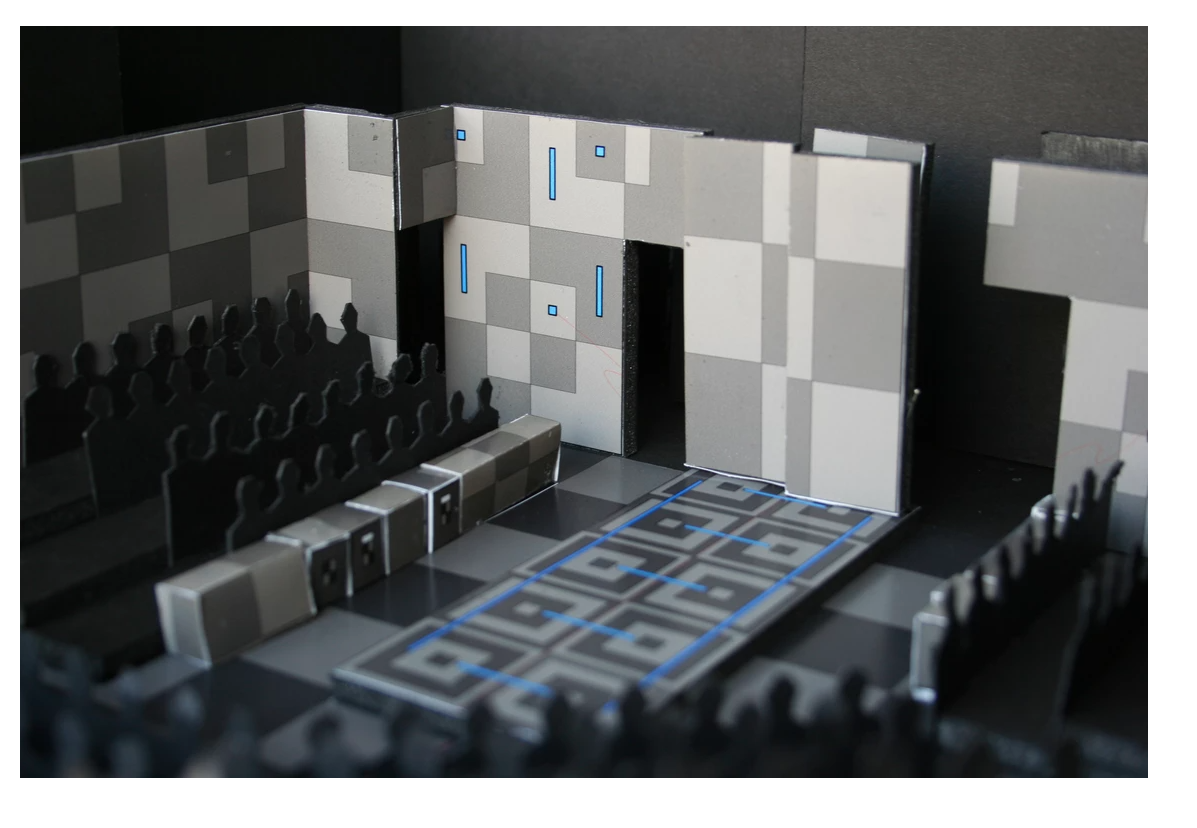
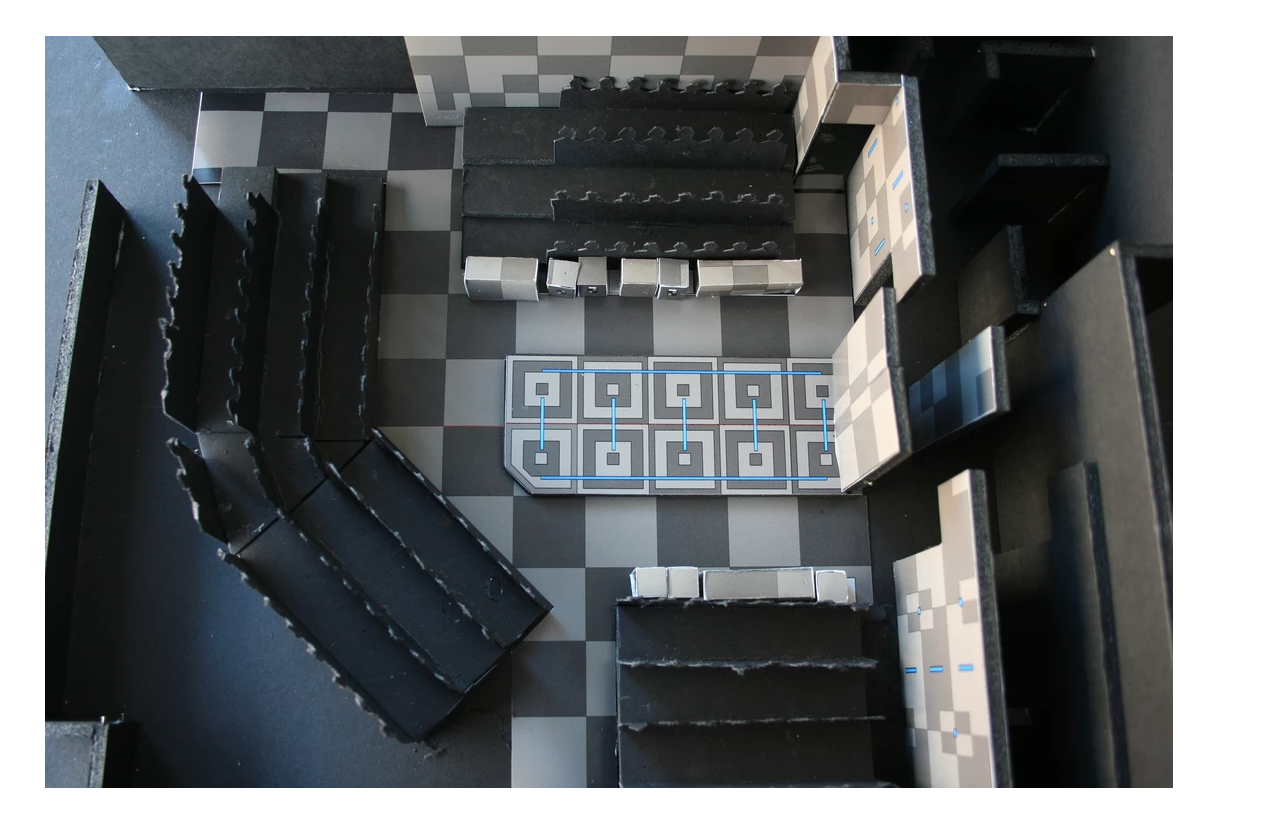
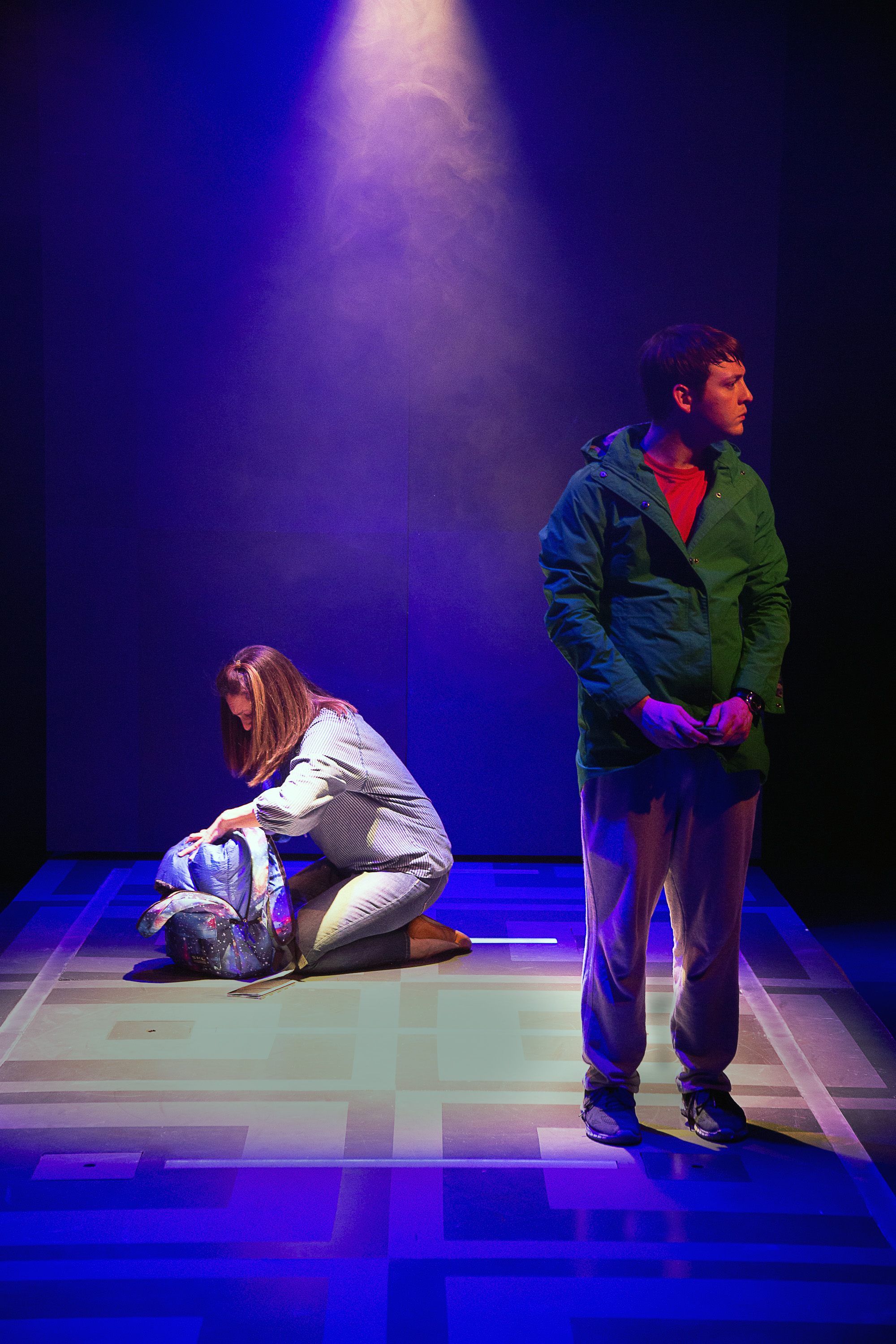
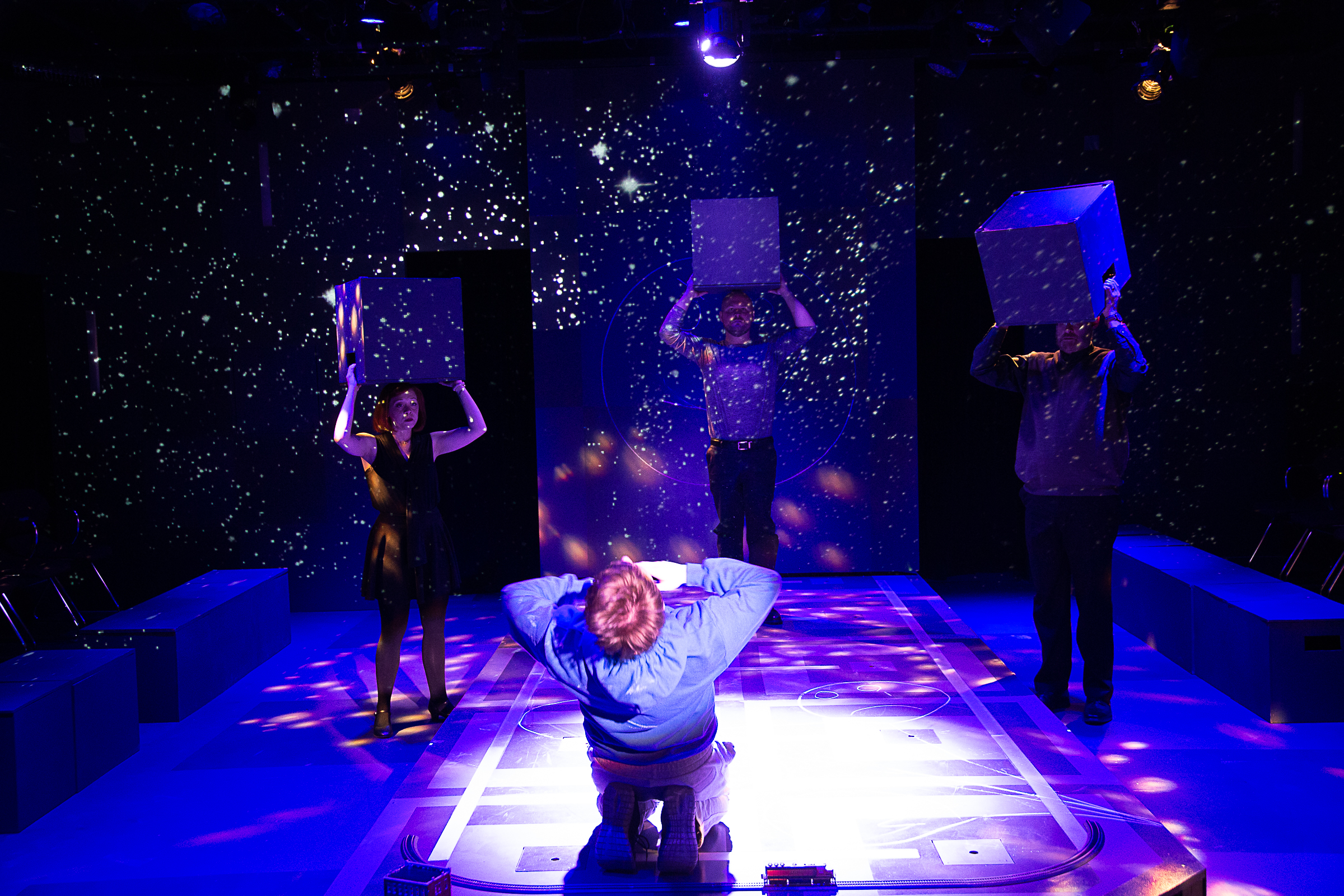
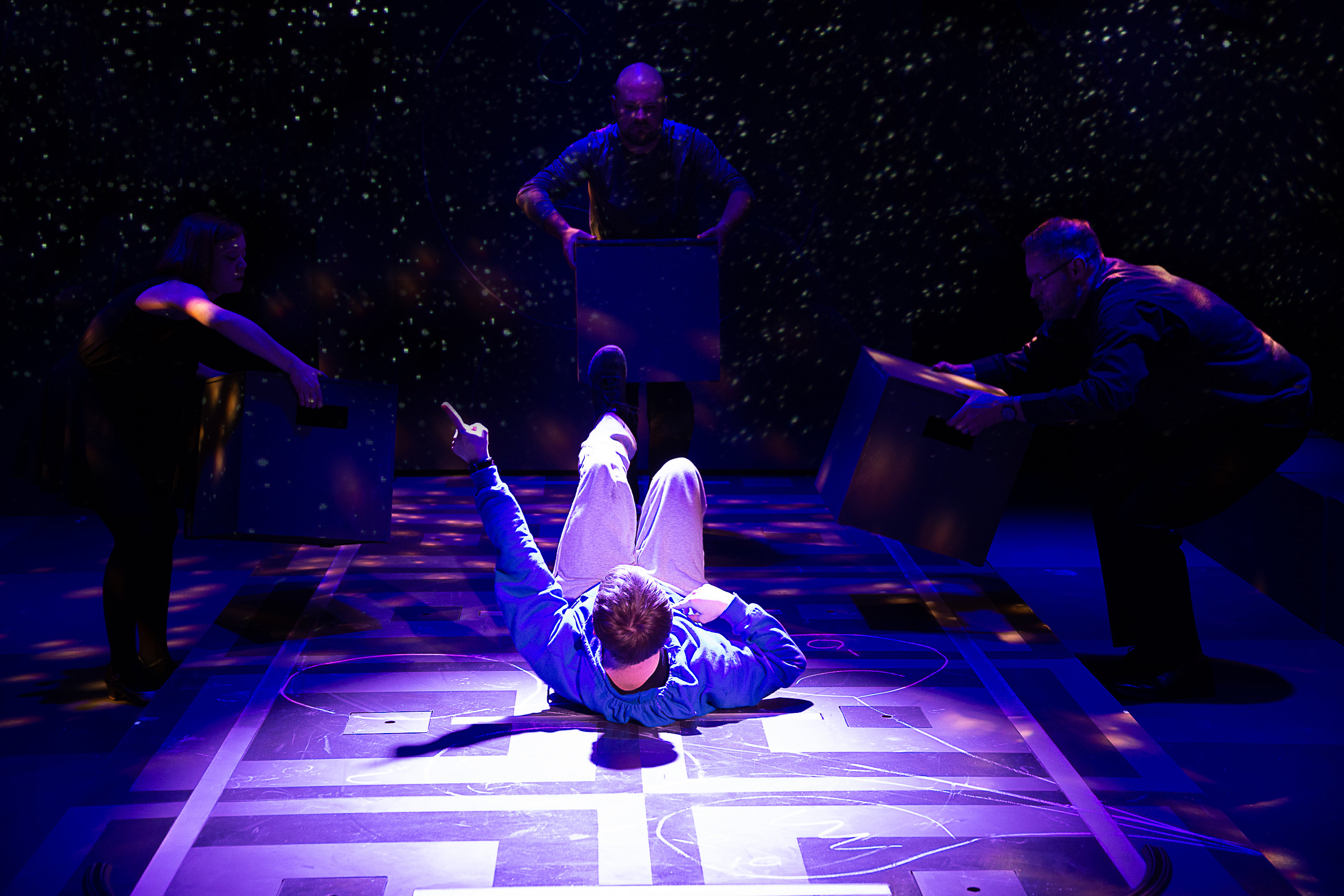
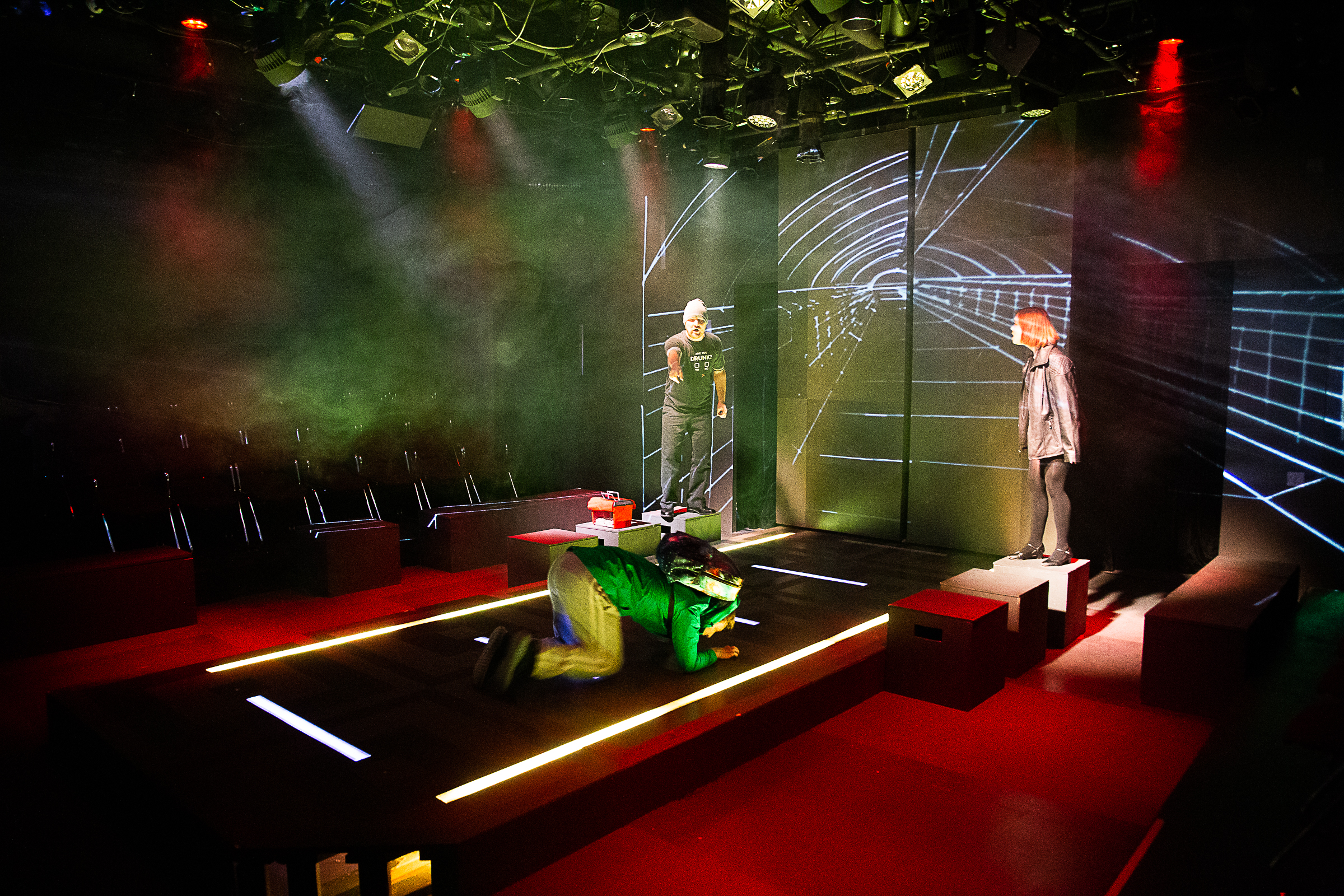
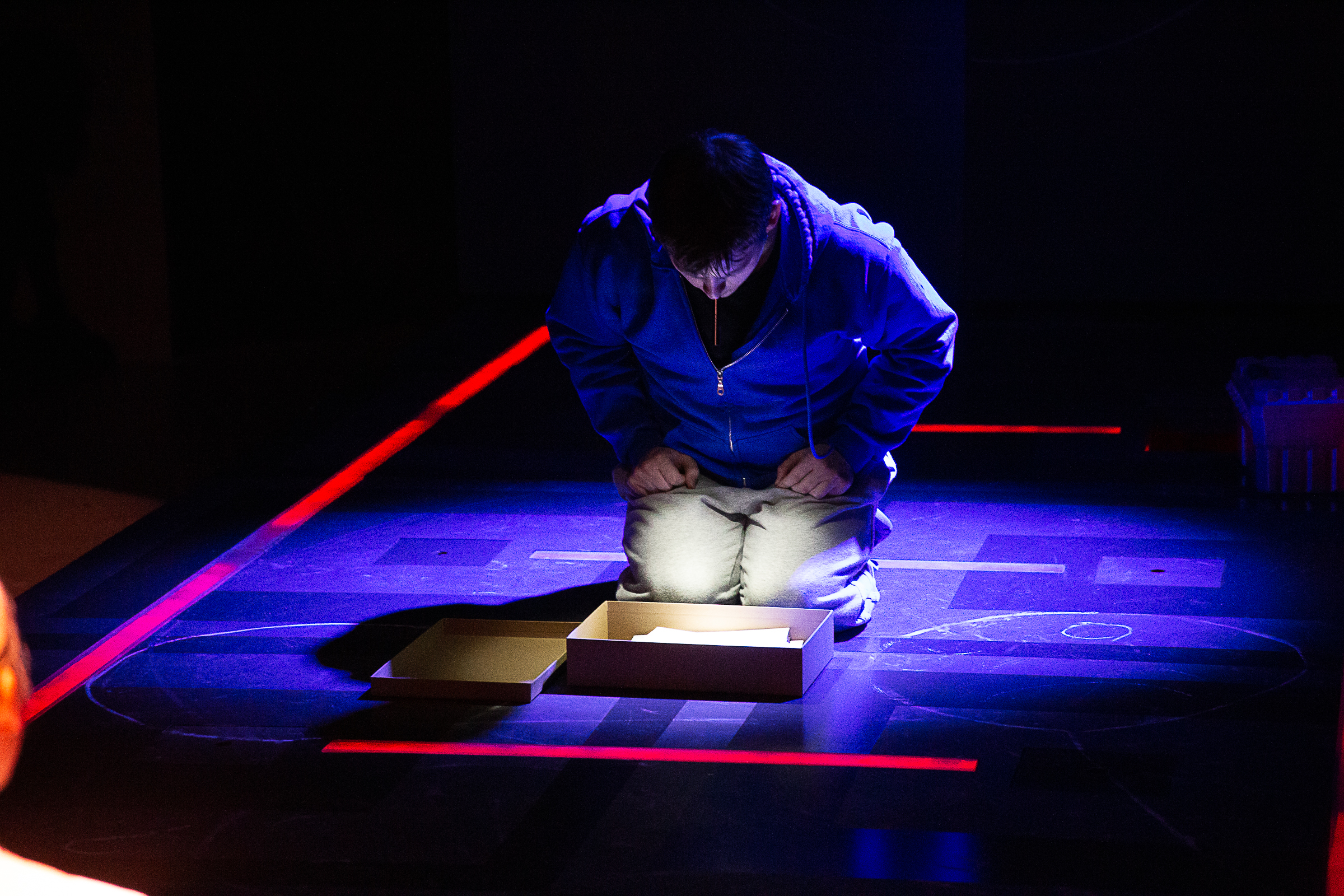
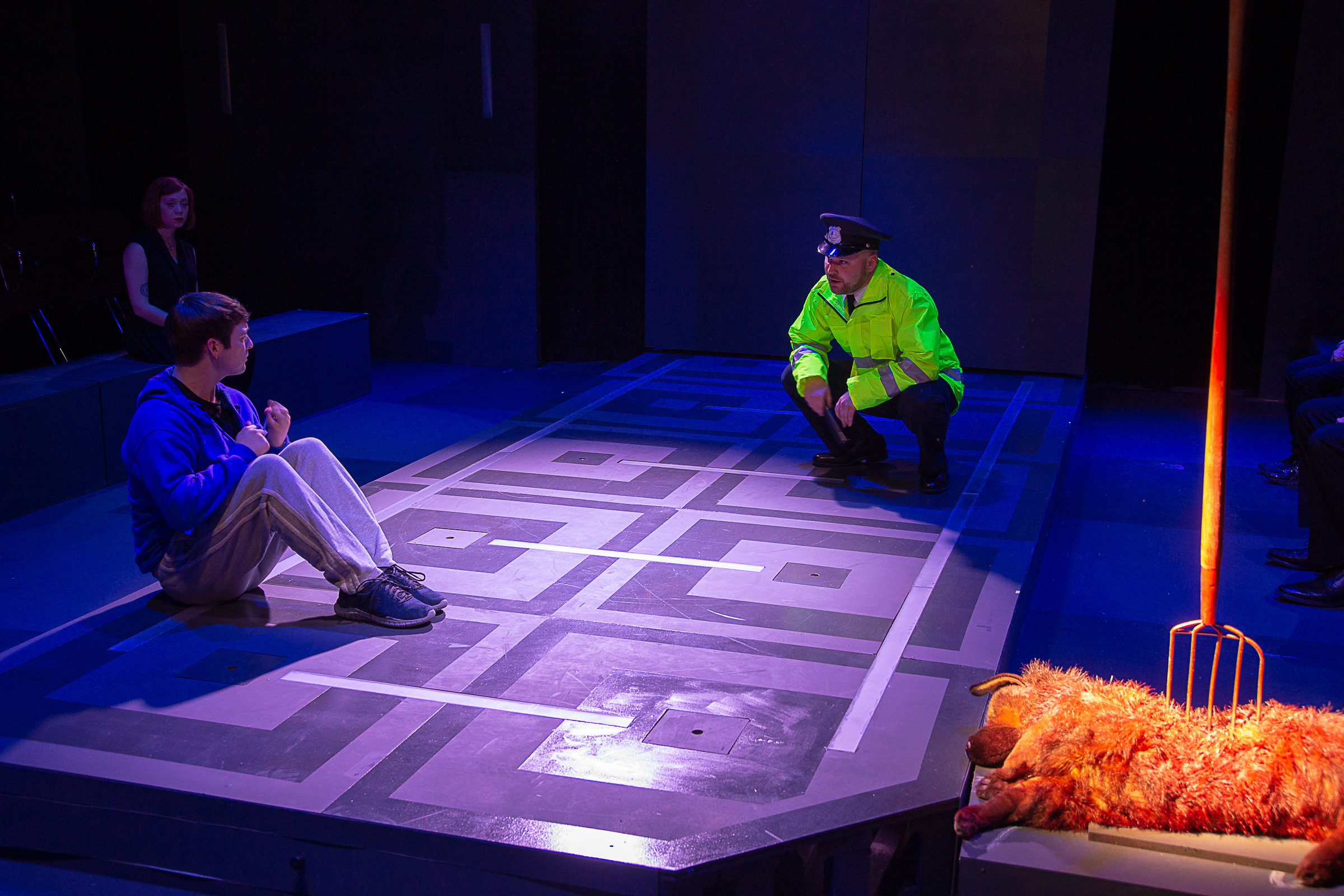
The obvious decision to support these three ideas while also providing support for the pace and rhythmn of the play was to create a scenic container that would embrace the rigidity of Christopher's worldview while also maximizing transformative potential. We began with a grid layout, looking at multi-colored squares of Coroplast (a translucent plastic), but ouor budget couldn't handle the material cost. Ultimately, we decided on a cool, matte gray color, and we created the grid pattern through the use of a gloss-sealer. This provided a strong sense of right angles, straight edges, and the rigidity for which we were hoping. The pace of the piece, changing from location to location with speed and frequency, led us to use small "acting cubes" with similar gray/gloss treatment to create all furniture props in the play. This made great sense in support of Christopher's direct address moments to the audience. . . The audience and Christopher were never to forget that they were in the theatre telling this story. The lids of the acting cubes and benches were hinged to allow for hand-props to be pulled and hidden at great speed, and the main platform had removable panels to allo for prop storage in the floor.
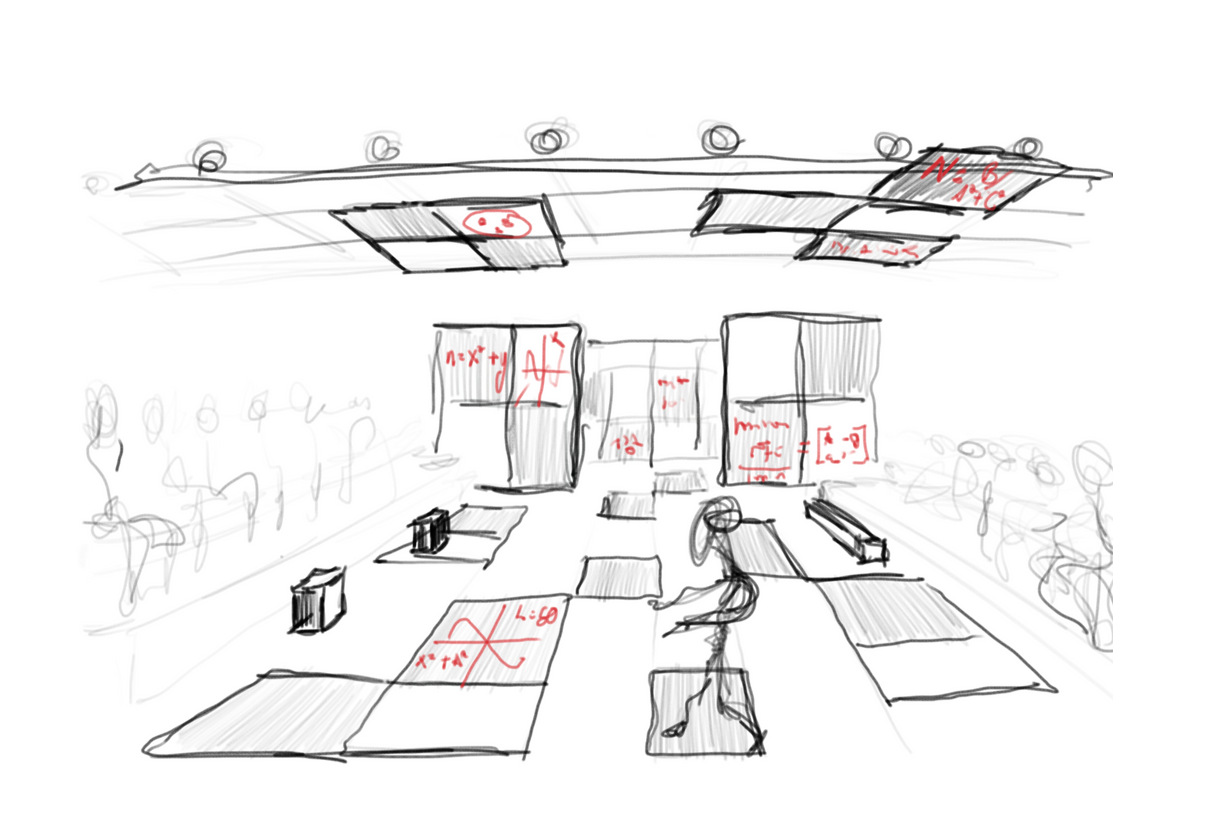
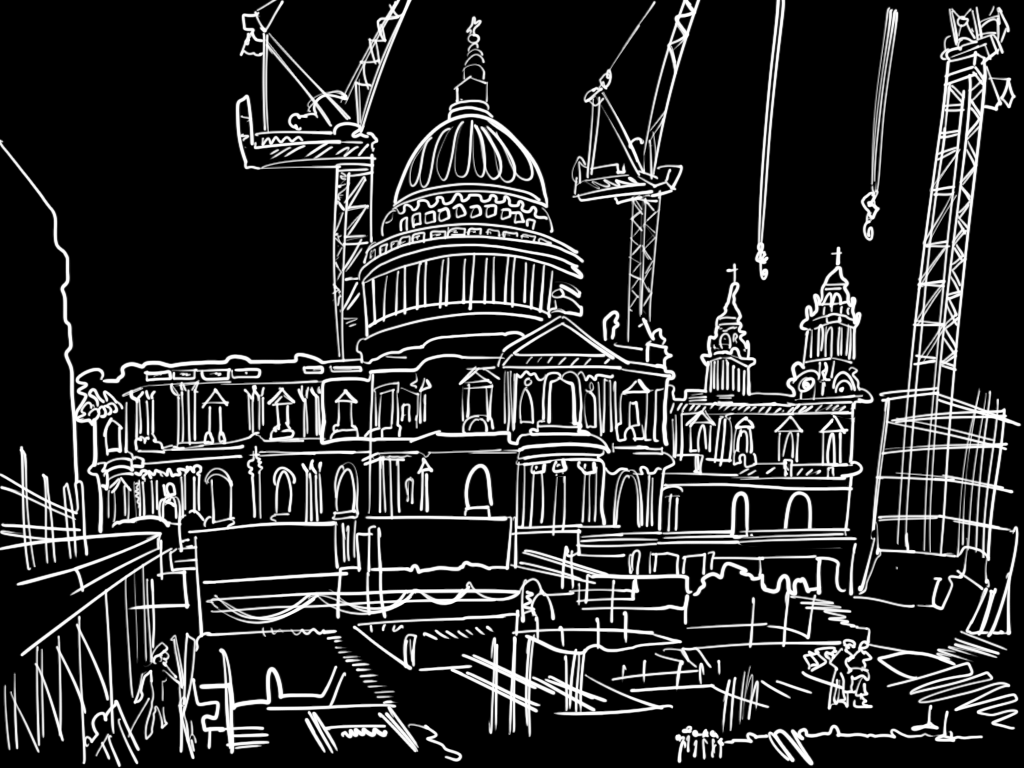
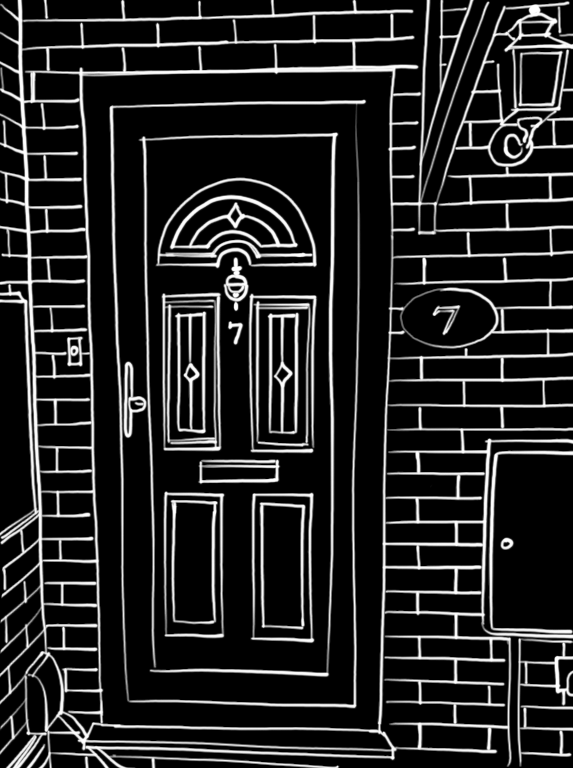
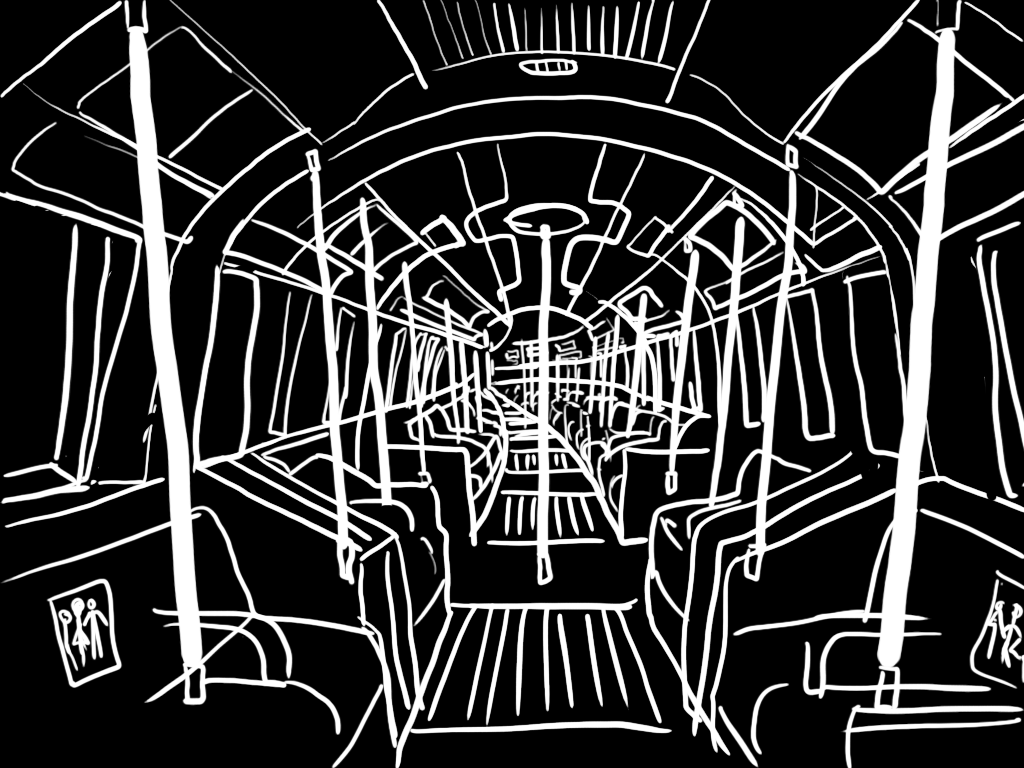
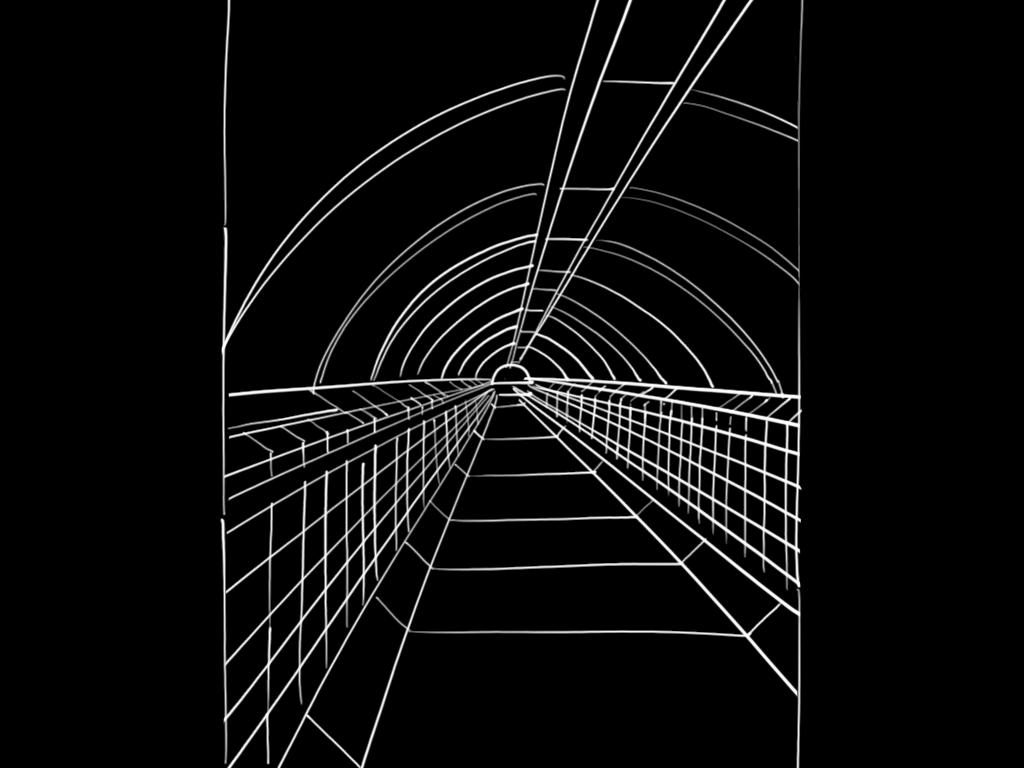
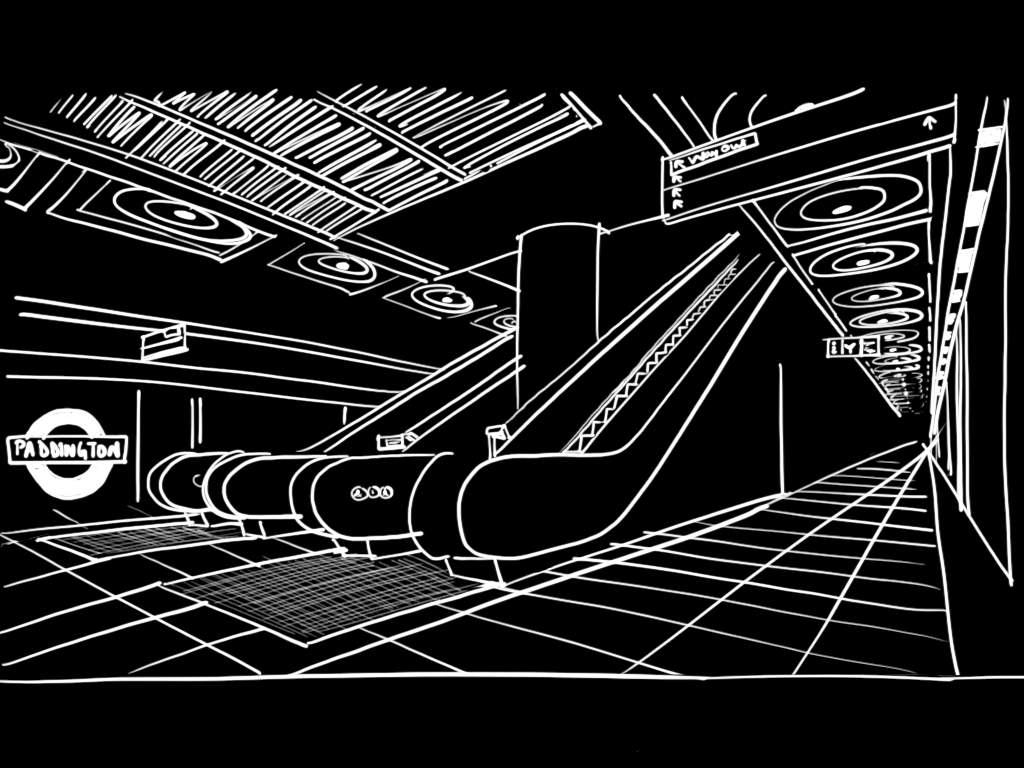
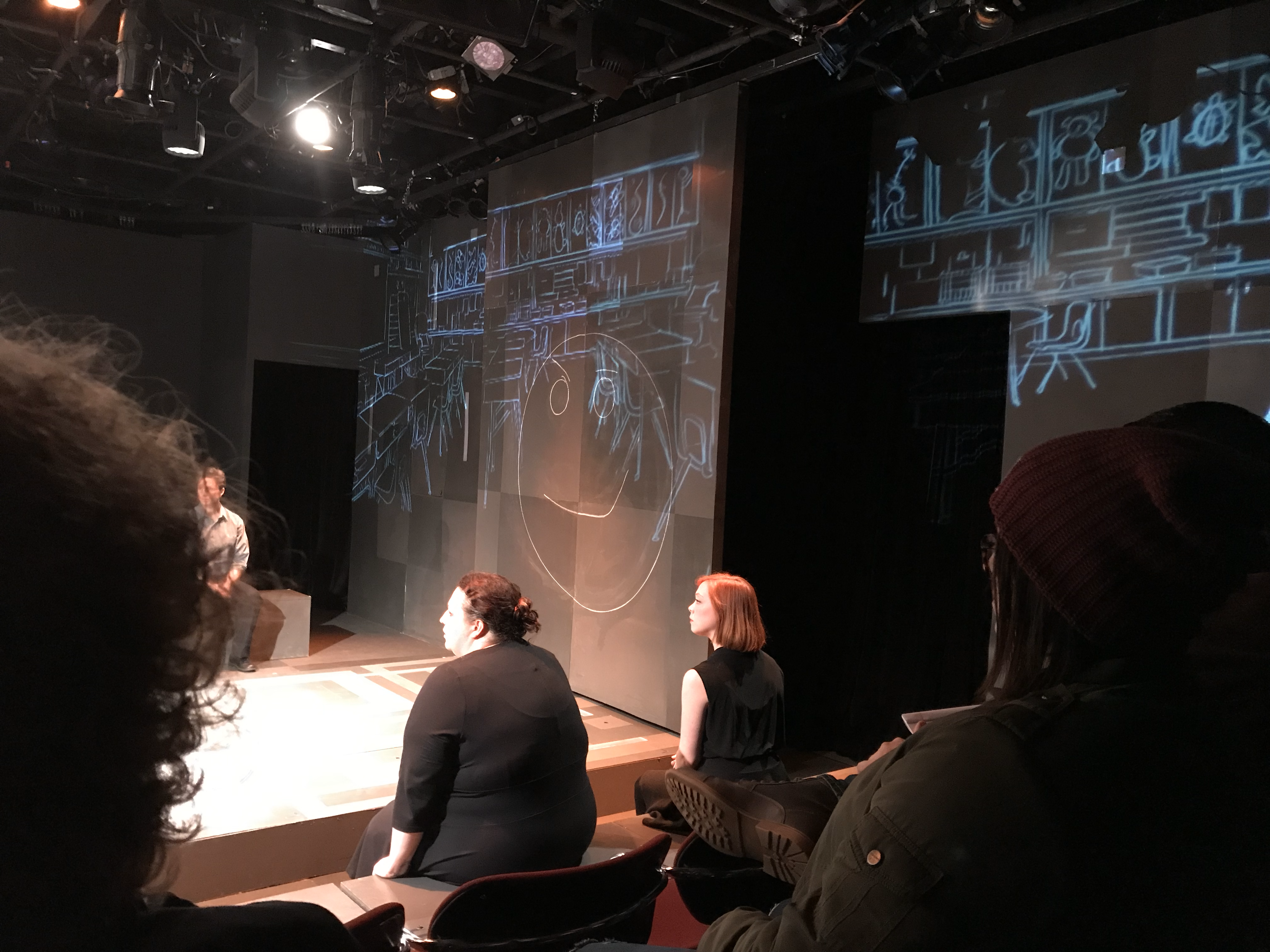
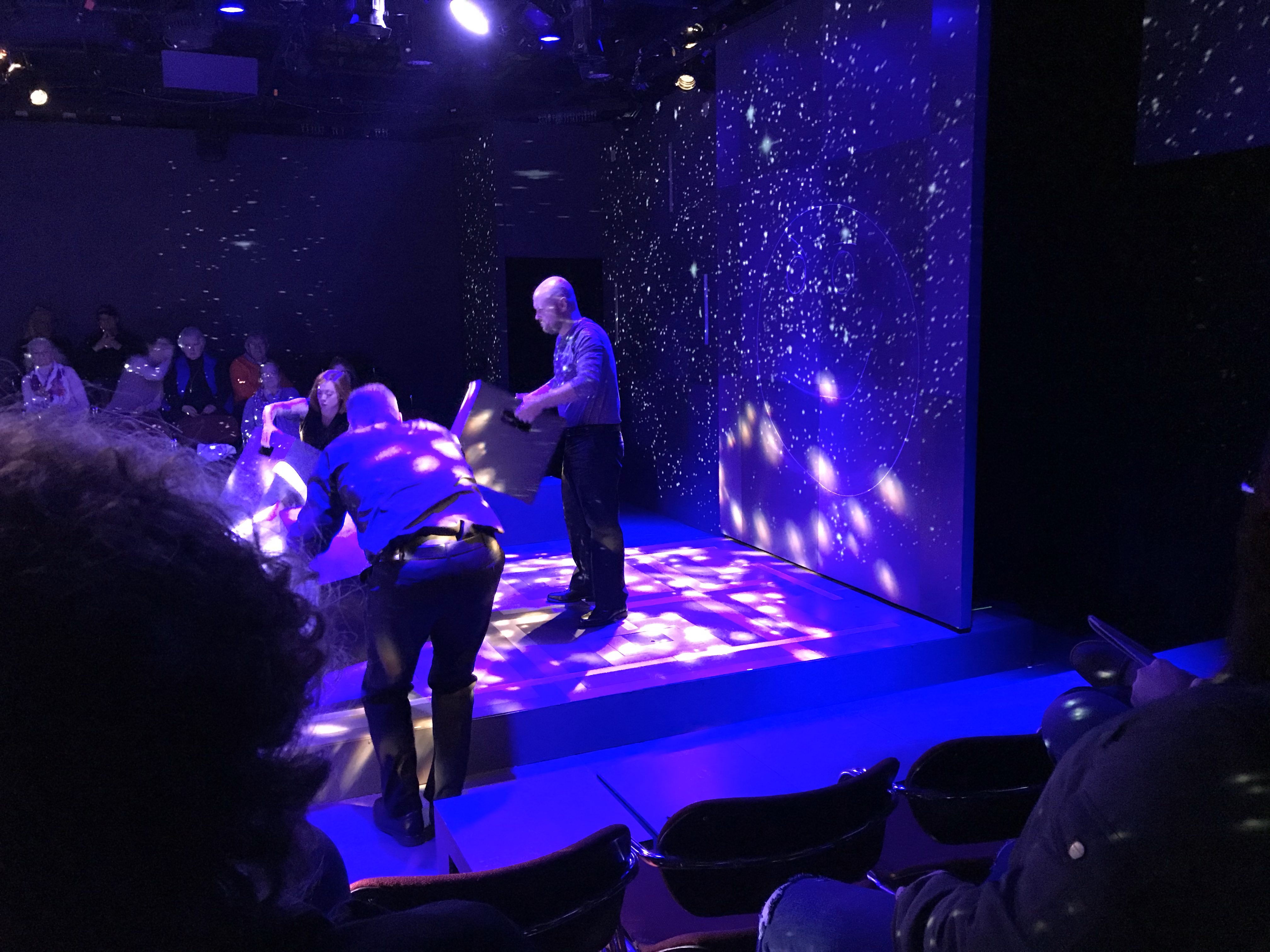
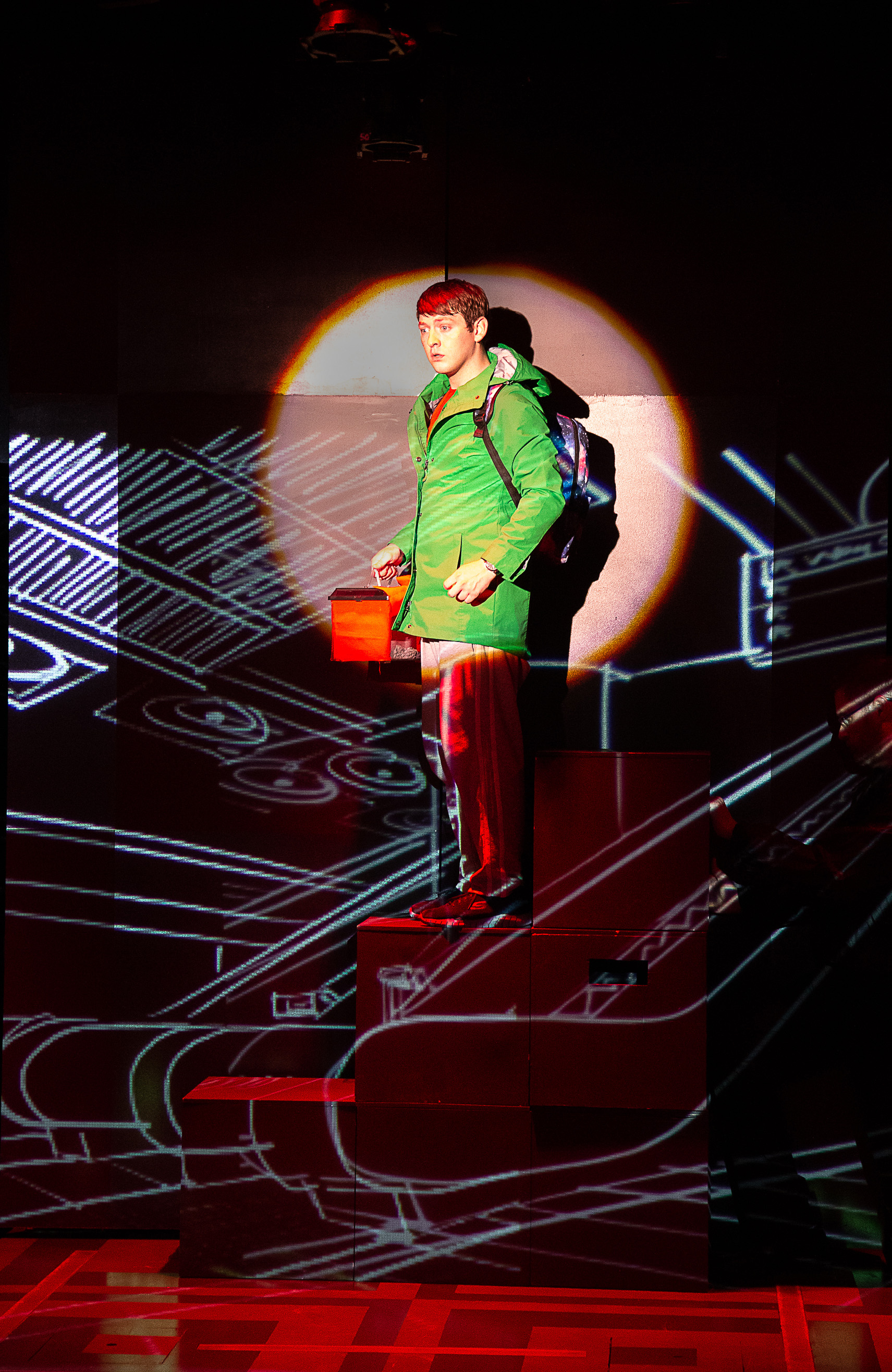
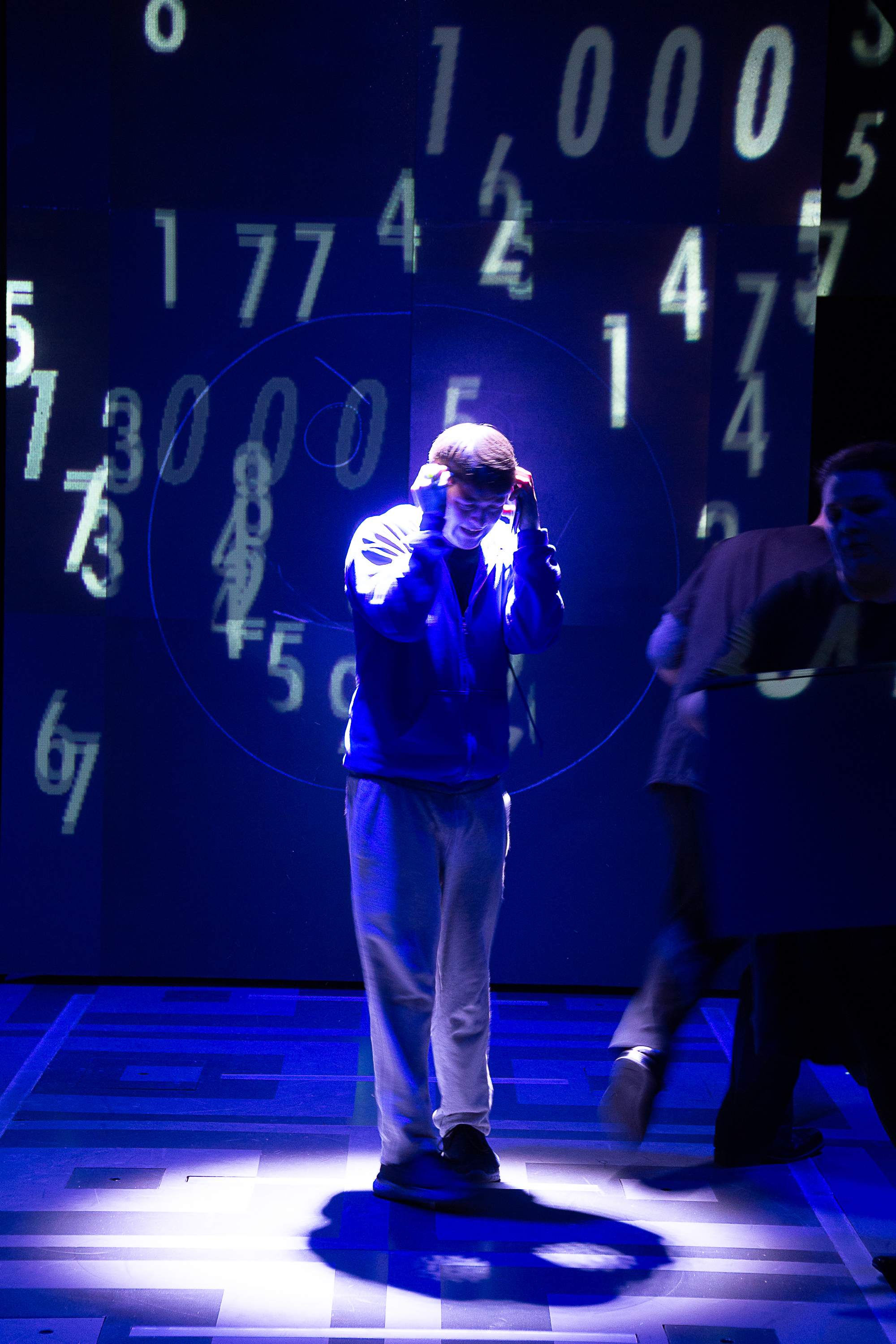
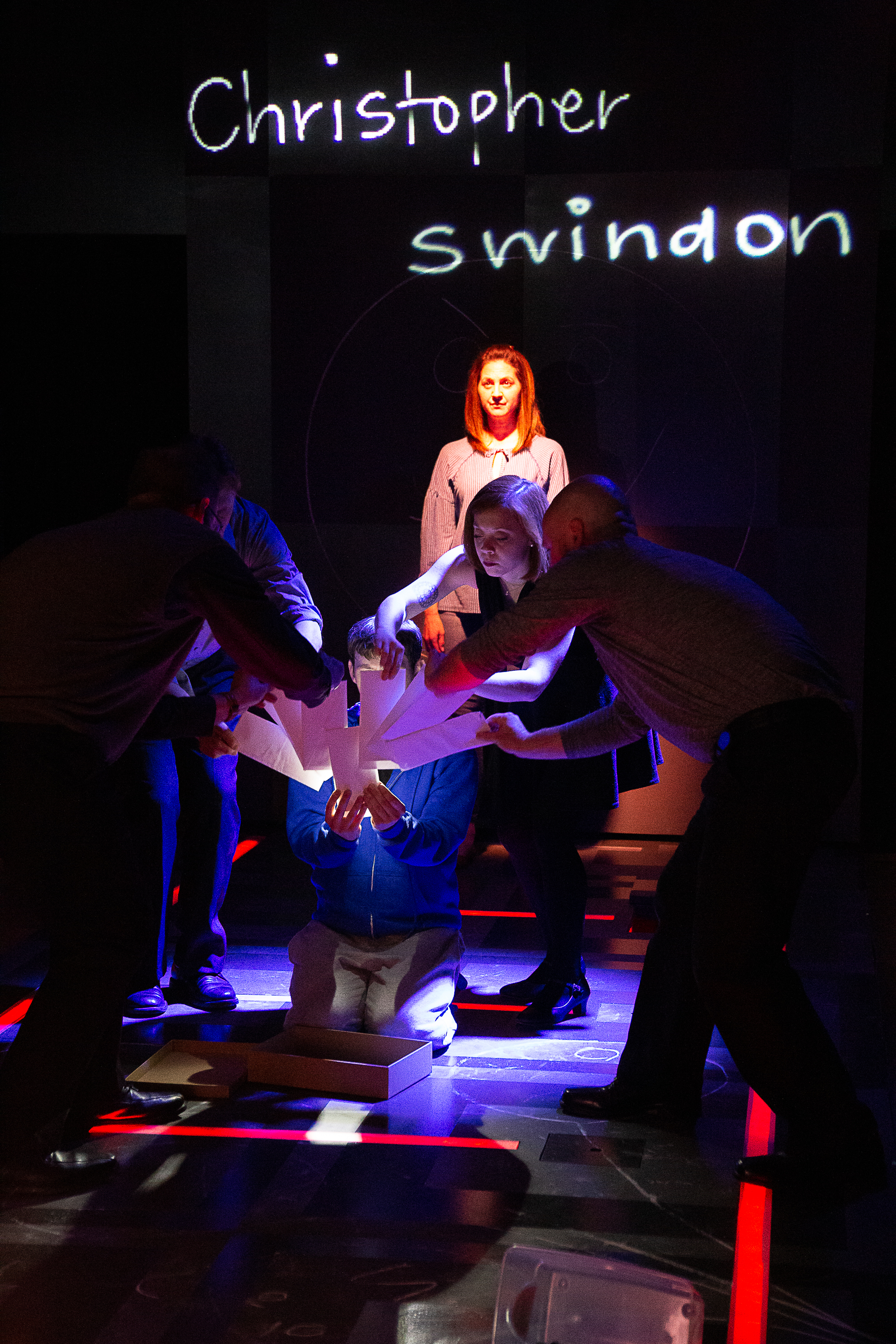
At this point, the creative team decided to use projections to help change between the three different audience/character perspectives in the show. While some projected imagery might contain hard lines, right angles, and support Christopher's sense of structure, projections also provided the opportunity to reflect on Christopher's youth, curiousity, and playfull nature. Starting with blue prints and technical drawings, we quickly realized that we needed to reinforce Christopher's youth, which led to using a number of sketches with a more youthful line quality (as if they were drawn by Christopher himself). These images were the primary signifiers of location, grounding us in whatever place Christopher was describing in his story. In moments in which Christopher's anxiety would build, we used more structural images, numbers, and straight lines that he might search for to help return to a more comfortable mental space, and as his anxiety built, we animated these structural images through flashing, shaking, and fast color changes to help reinforce that his grasp on control was fading.
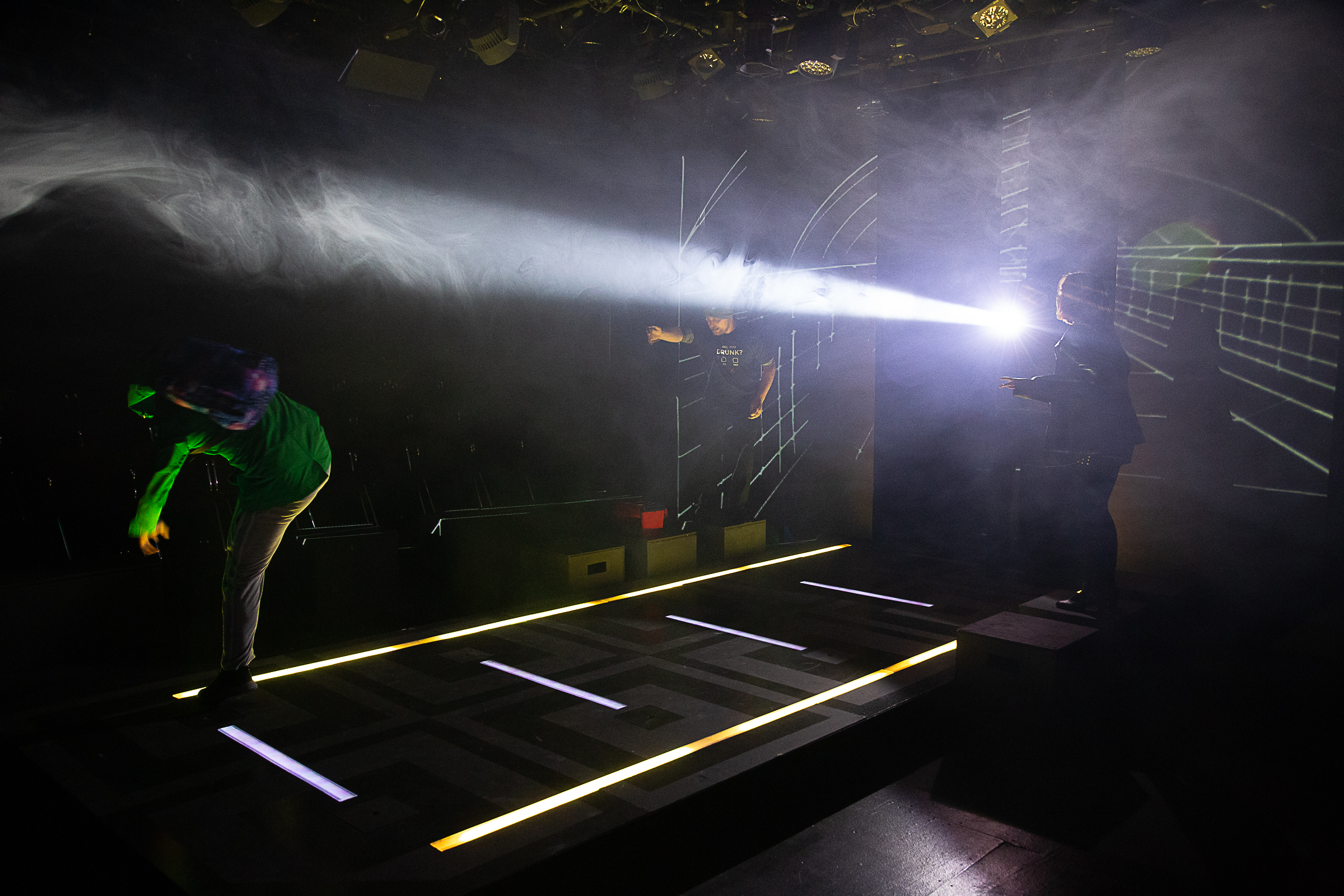
The venue itself is a small, "storefront" theatre in Kalamazoo, Michigan that seats about 100. The grid is only 13' above the stage floor, and the audience is always close to the stage. In some ways, this worked to our advantage, as Christopher brings the audience into the world of the play directtly. He requires active participation from the audience, which our director Jeremy Lapp grabbed hold of from the script and built upon throughout the performance. The challenge, however, was to manipulate scale within the space in ways that might support Christopher's sense of isolation, large train stations full of people, or a cramped London Tube car. In this venue, a single spotlight makes the whole theatre visible. . . Recognizing the "theatricalism" of the play (and Christopher's connection with the audience), we decided to embrace the fact that the space would be ever-present, and we added perspective to a number of our projections, allowing the images to continue off into space.
Lastly, the musical composition and sound design by Alex Tobin was impeccable, and he was in rehearsal from the beginning to provide opportunity for the actors to work with the pacing and emotion of the music. Alex's take on the music was similar to my ideas about projections: that the design support the world as seen (or heard) through Christopher's perspective. Alex had already created a score in full support of Christopher's actions and emotions, which meant that Alex and I spent a great deal of time together outside of rehearsal building animations in time with the music. These audio-visual meetings with Alex were iterative, generative, invaluable to creating the world of Christopher's mind.
CI - Scenic Drafting, Vectorworks Version
CI - Scenic Drafting, PDF Version
FA Theatre Perspective Base File
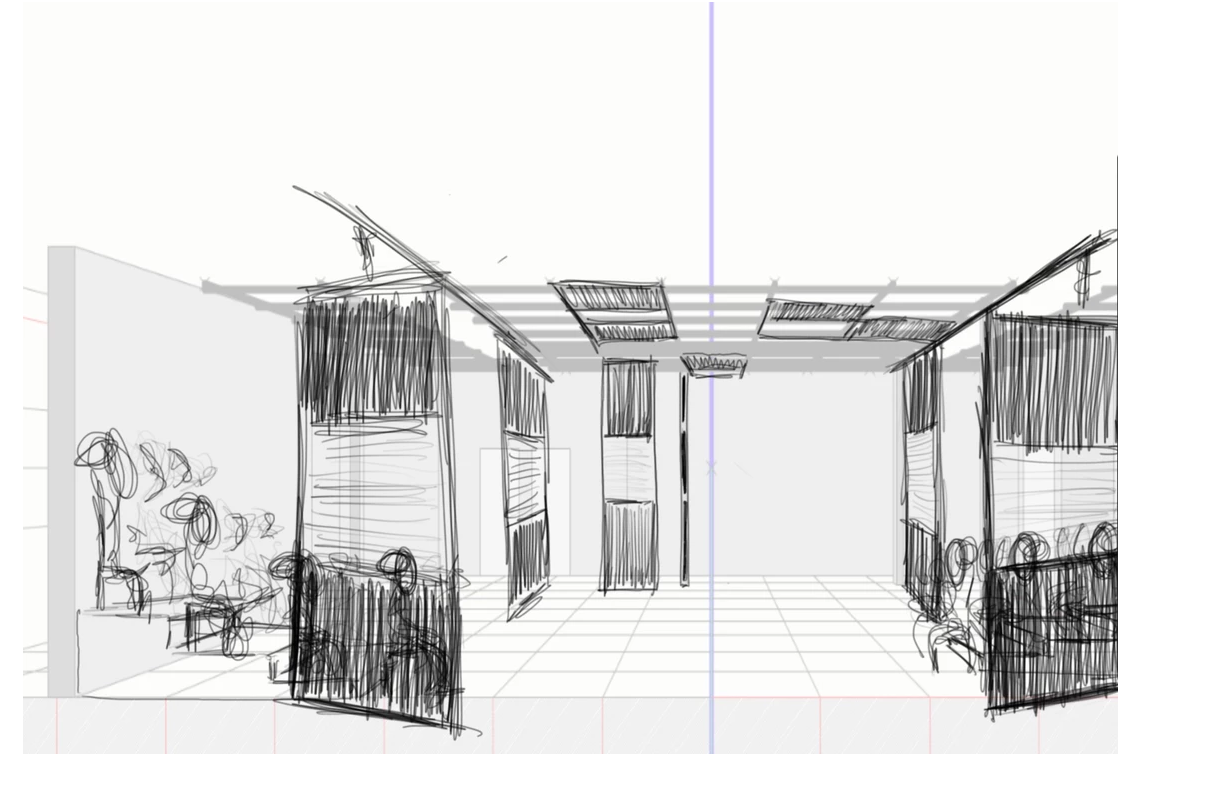
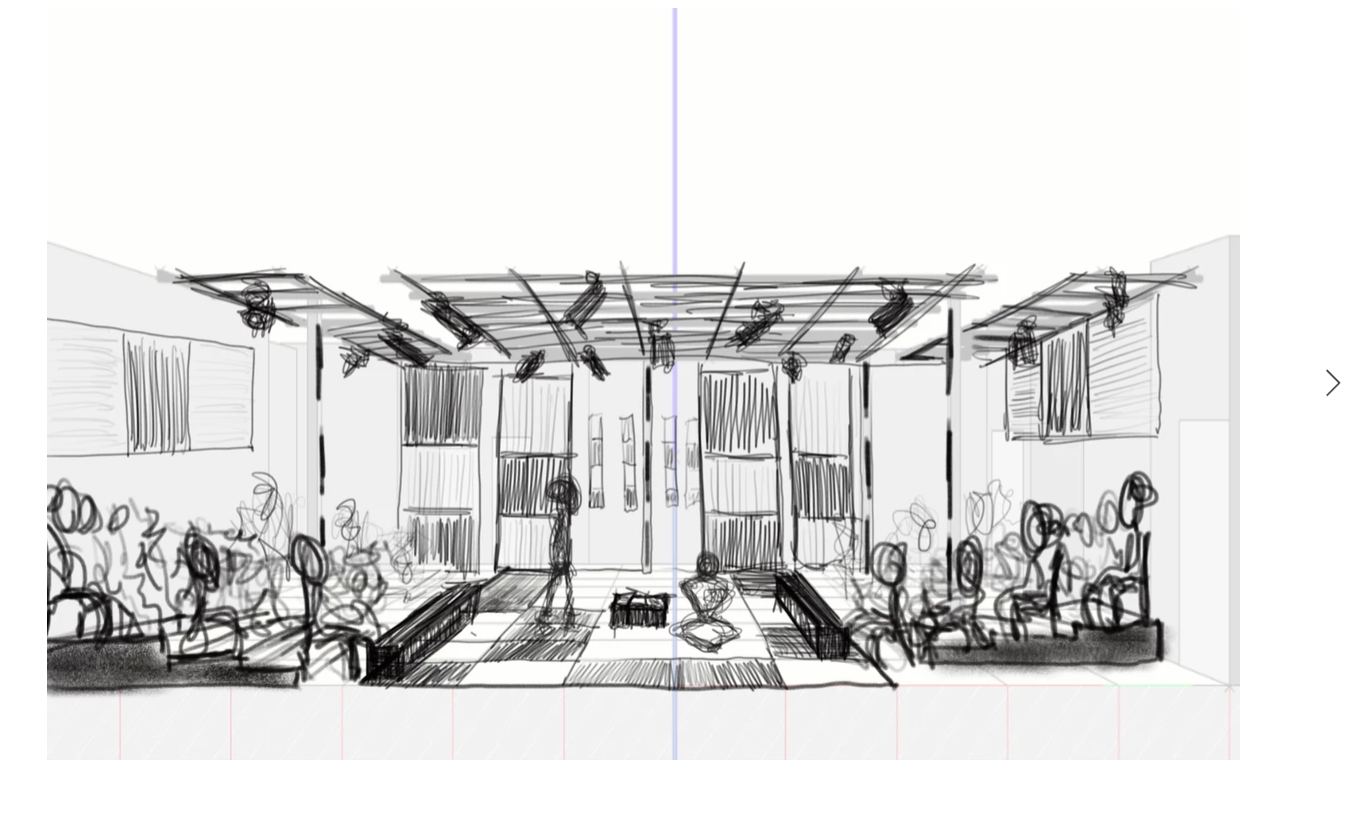
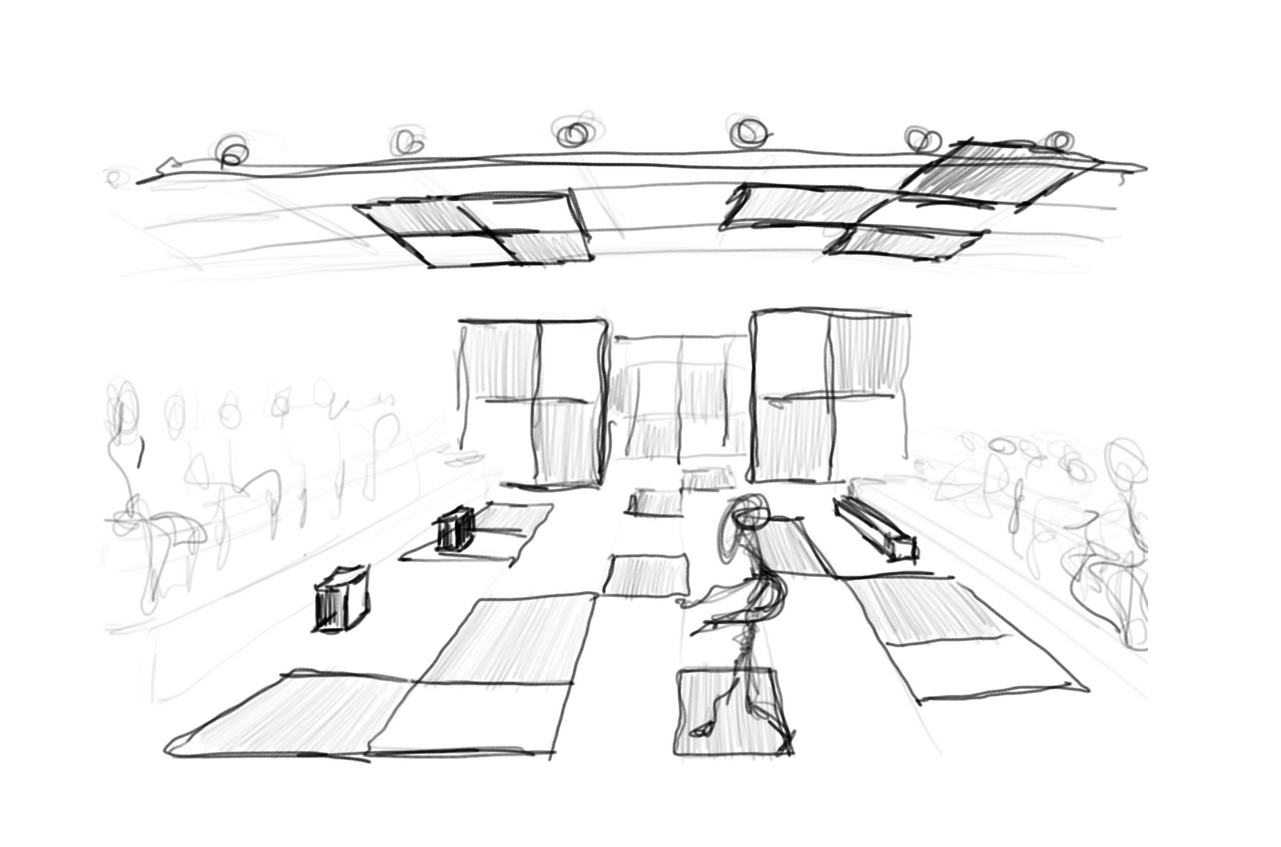
Napkin Concept Sketches
Click on a thumbnail to open it in a new window.
 |
 |
 |
 |
 |
 |
 |
Scenic Model Photos
Click on a thumbnail to open it in a new window.
 |
 |
 |
 |
Design Run Script with Projection Cue Placement
Projection QLab Show File
(PDF version with Readme Guide)
Projections QLab Show File (1673 "Cues")
Downloadable ZIP file with QLab software
Projection Drawing Examples
Click on image to enlarge in a new window.
.png) |
 |
 |
 |
 |
 |
Projection Animation Examples (Built in Adobe After Effects)
CONTENT WARNING: Videos contain flashing lights.
Rehearsal Footage - Unfinished Projections Recorded on iPad for Notes, Fixes, and Edits
 |
 |
 |
Production Photographs taken during Technical Rehearsal
by Becky Klose @KlosePhotography
Click on an image for a larger version. Images will open in a separate window.
 |
 |
 |
 |
 |
 |
 |
|
 |
 |
 |
 |
The following documents are provided only for additional information, should you desire more context for the purposes of this review.
Student MAP (THD499 Mentored Advance Project @ Grinnell College)
This is a website regarding the Curious Incident production project
created by my three student assistant designers. The site contains design statements, reflections, and portions of the design materials showcased within this review site.